

 +1 727 756 1632
 reachus@velan-bookkeeping.com
Running a small business means wearing many hats—from managing the day-to-day of running a business to the long-term strategy of your business, and everything in between. In the midst of all this, bookkeeping often becomes neglected. Profitability, however, is what keeps a company afloat. When you don’t have adequate bookkeeping, you can’t really track your cash flow, your expenses or even make decisions.
A background in accounting is not required to maintain meticulous financial records. With a few simple strategies, you can keep your finances in order and sidestep costly errors. This post explains 10 important bookkeeping best practices for small business owners, especially with an emphasis on bookkeeping tips for small business owners, and even some basic bookkeeping tips for non-accountants who want to keep on top of their company’s financial health.
Top 10 Bookkeeping Tips Every Small Business Owner Must Know:
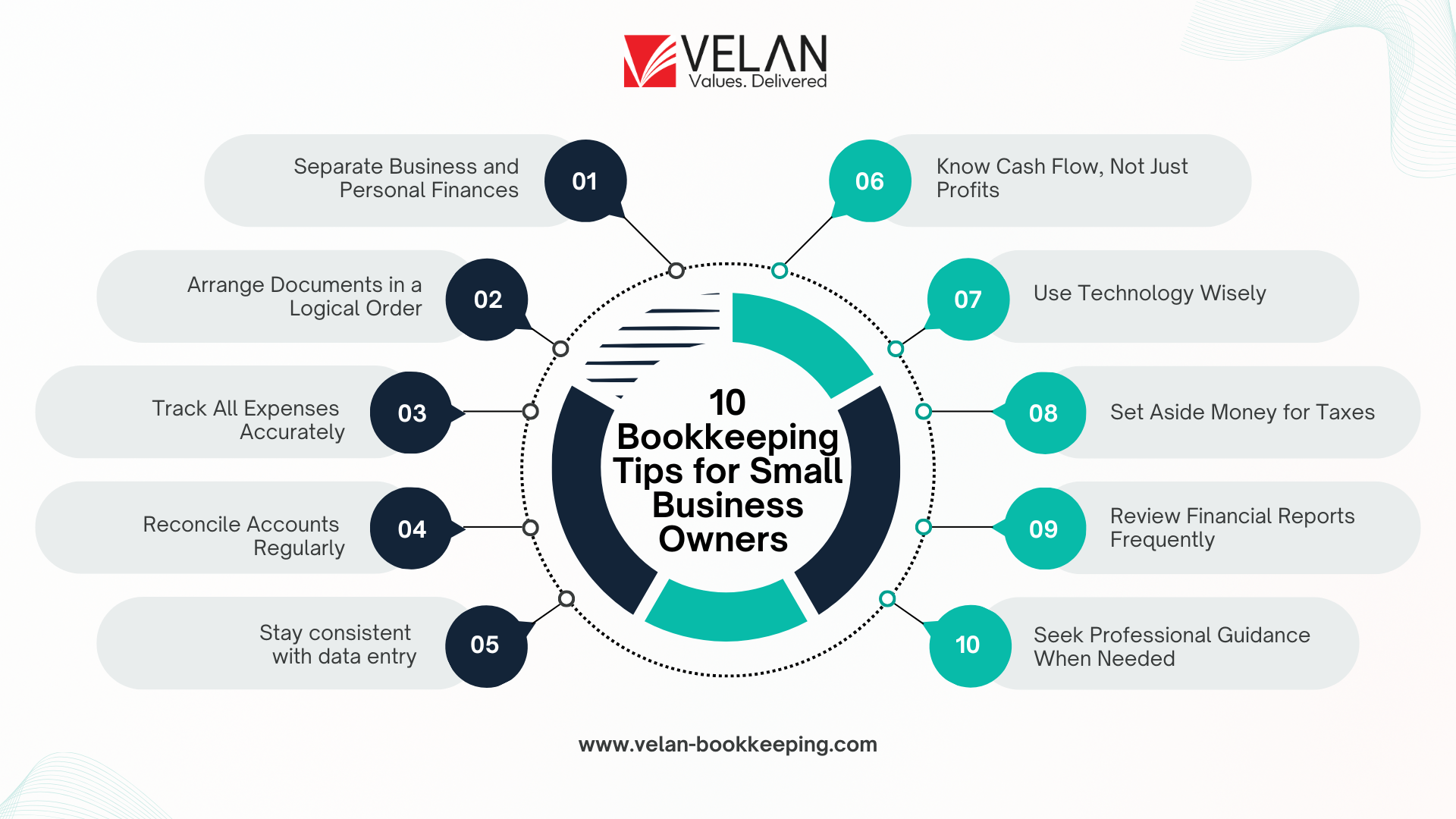
Separate Business and Personal Finances
Small business owners often commit the cardinal sin of mixing business and personal expenses. At first blush, it might seem benign, but it can easily become a nightmare for any financial records.
Why it matters:
- Keeps tax filings accurate.
- Makes expense tracking clearer.
- Prevents compliance issues during audits.
Action step:
Open a business bank account and a credit card for your company. This deed allows a separation between personal and business life.
Arrange Documents in a Logical Order.
Order is a key aspect of bookkeeping and goes far beyond recording transactions. Without some structure to your receipts, invoices, and bills, you cannot gain a proper grasp of your finances.
Why it matters:
- Saves time during tax time.
- Reduces the distress of evaluating financial performance.
- Solicited in the event of financial disputes.
Action step:
The next step is to develop a document system for archiving and filing them based on the set criteria and chronologically. Numerous small businesses know the ease of scanning receipts and saving them to various folders on the cloud.
Track All Expenses Accurately
All expenses within your business must be tracked, from the smallest and most insignificant office supplies to utility bills to client lunches. These seemingly small expenses really can add up, and ignoring them can easily distort your true profit.
Why it matters:
- Helps you gain insight on spending.
- It helps maximize tax deductions.
- Stopping budget leaks from small expenses that no one pays attention to.
Action step:
Dedicate 10 minutes each week to going through your spending and categorize it correctly.
Reconcile Accounts Regularly
Bank statements will never match your recorded transactions perfectly. Errors, omitted entries, or, yes, illegal charges can slip through if you don’t keep an eye on it.
Why it matters:
- Detects discrepancies early.
- Keeps financial records accurate.
- Improves financial decision-making.
Action step:
Balancing your accounts every month. Balancing your accounts involves checking your recorded transactions and statements to see if the two match. It gives instant financial information.
Stay consistent with data entry
You can only put off your bookkeeping for so long. If you wait too long, receipts are lost, and memory fades. Consistency is key.
Why it matters:
- It prevents a backlog of transactions.
- Provides real-time financial insights.
- Keeps cash flow visible and manageable.
Action step: Schedule bookkeeping sessions—either daily or weekly. Treat them like non-negotiable appointments.
Know Cash Flow, Not Just Profits
Profit and cash flow are often confused by many small business owners. In profit and loss, this is what’s left after expenses, but cash flow is the flow of money into and out of your accounts when it actually happens.
Why it matters:
- It helps prevent those surprises, such as becoming broke, though you are profitable.
- Helps with budgeting and planning.
- Guarantees that you have enough to pay the bills on a day-to-day basis.
Action step:
Get moving by making a simple cash flow statement monthly. Even a rudimentary account of what comes in and goes out can reveal patterns and help you prioritize.
Use Technology Wisely
You don’t need to be a financial whiz to look after your books well. Low-cost tools can help reduce data entry, automate calculations, and produce reports.
Why it matters:
- Reduces manual errors.
- Saves time on repetitive tasks.
- Provides real-time insights into finances.
Action step:
Check out tools that are geared towards beginners and small businesses. These frequently come with dashboards that render financial data comprehensible—even to non-accountants.
Set Aside Money for Taxes
If they’re not planned for during the year, taxes can surprise business owners. Don’t pack at the last minute; instead, pack gradually.
Why it matters:
- Saves you money during tax season.
- Stops being charged for late payments.
- Helps to plan your budget more consistently.
Agreed action:
Determine how much of your monthly income you want to allocate to a tax savings account. Any amount, even small, will reduce stress at year-end.
Review Financial Reports Frequently
Numbers tell a story. Profit and loss statements, balance sheets, and cash flow reports can tell you if your business is expanding, making no money, or losing money.
Why it matters:
- Informs smart decision-making.
- Helps you spot potential problems early.
- Provides insights for business expansion.
Action step:
Look over financial reports at a minimum once every three months. If you aren’t comfortable reading them, focus on trends—are the profits increasing, the cash reserves holding steady, or the expenses rising?
Seek Professional Guidance When Needed
While these are great for small business owners, there are times you’ll need expert help. And complicated tax laws, payrolls, or compliance can quickly become too much for a DIY project.
Why it matters:
- Ensures compliance with financial regulations.
- Provides expert advice for business expansion.
- This will allow you to reinvest more time into your business.
Action step:
It never hurts to get a bookkeeper or accountant to perform the occasional review. Regular advice can help keep your financial records in tip-top shape.
Final Thoughts
Keeping the books may be one of the most despised tasks for small business owners, although it is among the most essential. By keeping personal and business expenses separate, maintaining good record-keeping habits, and looking at financial reports frequently, you will have a deeper understanding of how healthy your business is.
If you are not a financial person, the following tips will be helpful to you in bookkeeping. These are simple bookkeeping tips for non-accountants, which will help you to adopt good habits and not feel intimidated.
Keep in mind: proper bookkeeping is primarily a business owner’s way to have a plan for the future and not just a requirement of the law.
Through discipline, being well-structured, and taking the initiative, you will not only steer your business in the right direction but also be very sure about the course you need to take when dealing with financial matters.
QB Cleanup for Small Business